

Table of Contents
Parenting in America has always been a balancing act — between work and family, structure and freedom, tradition and technology. But as 2025 unfolds, artificial intelligence (AI) is entering one of the most personal spaces of all: parenthood.
An AI Parenting App isn’t just a digital organizer or a baby tracker anymore. It’s a cognitive partner — capable of recognizing emotional patterns, predicting developmental needs, and easing the “mental load” parents often carry silently.
As more American parents navigate demanding work schedules, hybrid jobs, and rising digital distractions, AI-powered parenting apps are quietly becoming the modern co-parent — helping families stay connected, informed, and emotionally in sync.

An AI Parenting App uses machine learning, behavioral analytics, and emotion recognition to help parents manage daily routines, track milestones, and even improve communication with children.
Unlike traditional apps that simply store data, AI parenting apps in the USA can:
- Analyze a child’s behavior patterns.
- Suggest optimal screen-time limits.
- Offer personalized tips for sleep, diet, and emotional growth.
- Predict mood fluctuations based on activity trends.
They are built on the foundation of Generative and Predictive AI, turning raw parenting data into real-life insights — giving parents smarter decisions with less effort.
American families are under increasing pressure.
- Two-thirds of parents work full-time jobs.
- One-third report feeling “digitally overwhelmed.”
- Over 70% use at least one mobile tool for parenting or education.
The rise of AI apps isn’t about replacing intuition — it’s about supporting it.
“I used to feel guilty for not remembering every milestone,” says Rebecca (34, Austin). “Now, the AI app helps track everything — feed times, naps, moods — and even suggests bedtime adjustments. It feels like a calm reminder, not a demand.”
Modern AI parenting apps use data-driven empathy. Here’s how:

Apps monitor feeding, sleep, playtime, and emotional responses — learning from the child’s patterns.
Machine learning algorithms detect trends, such as early signs of fatigue, attention loss, or stress indicators.
Through voice and text analysis, apps can adapt tone, send reminders, and even recommend parenting articles based on mood.
AI tools connect both parents, caregivers, and grandparents — ensuring consistency in routines and expectations.
Daniel (40, Seattle) shares: “Our AI parenting app connects directly with our pediatrician’s reminders. It’s synced with Google Calendar, and even notifies us of vaccination updates automatically.”
Laura (29, New York) says: “The AI module detects my kid’s screen-time stress and suggests when to shift from digital play to outdoor activities. It’s like having a mindful nanny.”
Nina (35, Chicago) adds: “It understands when I’m at work, avoids unnecessary notifications, and gives me emotional summaries when I get home. That’s peace of mind.”
These reviews reveal how trust is built — not through flashy features, but through reliability, privacy, and empathy.
AI parenting apps handle sensitive data — from child sleep logs to voice patterns. The best-rated apps in the U.S. comply with:
- COPPA (Children’s Online Privacy Protection Act)
- GDPR-equivalent clauses for cross-border data
- End-to-end encryption for every user activity
Transparent data policies and local storage (where possible) help ensure parental trust.
While AI can automate a lot, it also teaches empathy back to parents.
By showing emotional patterns (e.g., “your child seems calmer after outdoor play”), AI tools remind parents of what truly matters — connection over control.
“It made me more aware of my child’s emotions,” Ben (37, Denver) mentions. “I stopped seeing it as data and started seeing it as a dialogue.”
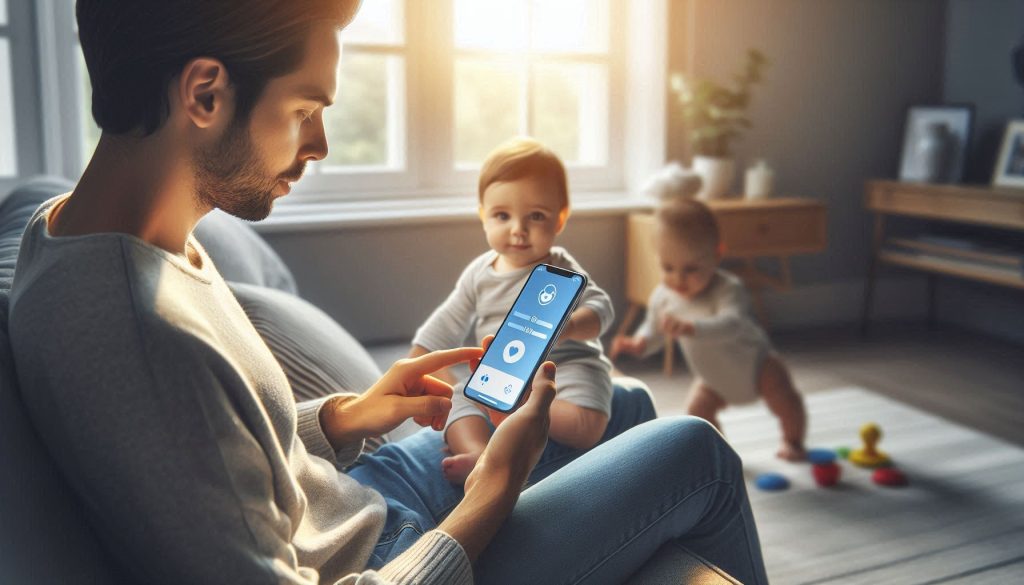
AI parenting apps are evolving beyond “baby trackers.”
They are merging mental health support, family scheduling, financial planning, and smart home integration.
Future updates might include:
- Emotion-adaptive home automation (lights, sounds, environment).
- AI-driven family wellbeing analytics.
- Multilingual cultural adaptability for immigrant parents.
In short, the AI parenting app will become the “emotional operating system” of the modern American household.
Among the next-generation AI parenting platforms available in 2025, TinyPal emerges frequently in user discussions for its humanized AI — tools that understand context, not just data.
Without being intrusive, it learns from your family rhythm, integrates securely, and promotes wellbeing.
It’s the kind of digital partner that reflects what American parenting truly values: balance, connection, and safety.

The AI Parenting App USA trend isn’t about gadgets replacing love — it’s about enhancing it.
In a time when attention is fragmented, and every second counts, AI can be the quiet, intelligent force that restores calm and care.
As AI evolves, the most successful parenting apps won’t be the smartest — they’ll be the kindest.
