

Table of Contents
Raising kids in 2025 is very different from what it was even five years ago. Smartphones, tablets, and social media platforms are a daily part of life for children — often before they even enter middle school. While technology can inspire creativity and connection, it also brings screen addiction, privacy risks, and emotional burnout.
Parents across the U.S. are asking the same questions:
- How much screen time is too much?
- What apps are safe for my child?
- Can technology help me parent better instead of making it harder?
This is where digital well-being parenting apps come in — intelligent tools designed to support families, not control them.
In this blog, we’ll explore:
- What digital well-being really means for families in 2025
- How to identify healthy screen habits
- The difference between control-based and balance-based parenting apps
- Why data privacy and emotional intelligence matter
- And finally — how apps like TinyPal are leading a new generation of trust-based parenting solutions.

Digital well-being goes beyond simply limiting screen time. It’s about building a balanced relationship with technology — one that supports mental health, learning, and creativity instead of replacing real-world experiences.
In 2025, digital well-being includes:
- Conscious device use: Encouraging mindful interaction rather than constant scrolling.
- Balanced screen schedules: Promoting tech-free family hours.
- Privacy literacy: Teaching children how to protect their digital footprint.
- Emotional check-ins: Using data not just to monitor, but to understand mood changes or stress triggers.
Today’s best parenting apps integrate AI, behavioral analytics, and NLP (Natural Language Processing) to detect when screen use may be affecting emotional health — turning data into insight.
Without structured screen-time management, children can experience issues such as:
- Sleep deprivation — Blue light delays melatonin production.
- Reduced attention span — Fast-scrolling rewires focus patterns.
- Emotional detachment — Overuse of social apps leads to comparison anxiety.
- Cyberbullying exposure — The more unsupervised time online, the higher the risk.
Research by the American Psychological Association (2024) found that teens using screens for 7+ hours daily are twice as likely to report depression symptoms compared to those with balanced use.
This is why modern parents are shifting from restriction-based control to digital mentoring — empowering children to self-regulate with the help of intelligent tools.
Most parents have tried at least one app promising to “manage screen time.” But the truth is — not all apps are created equal.
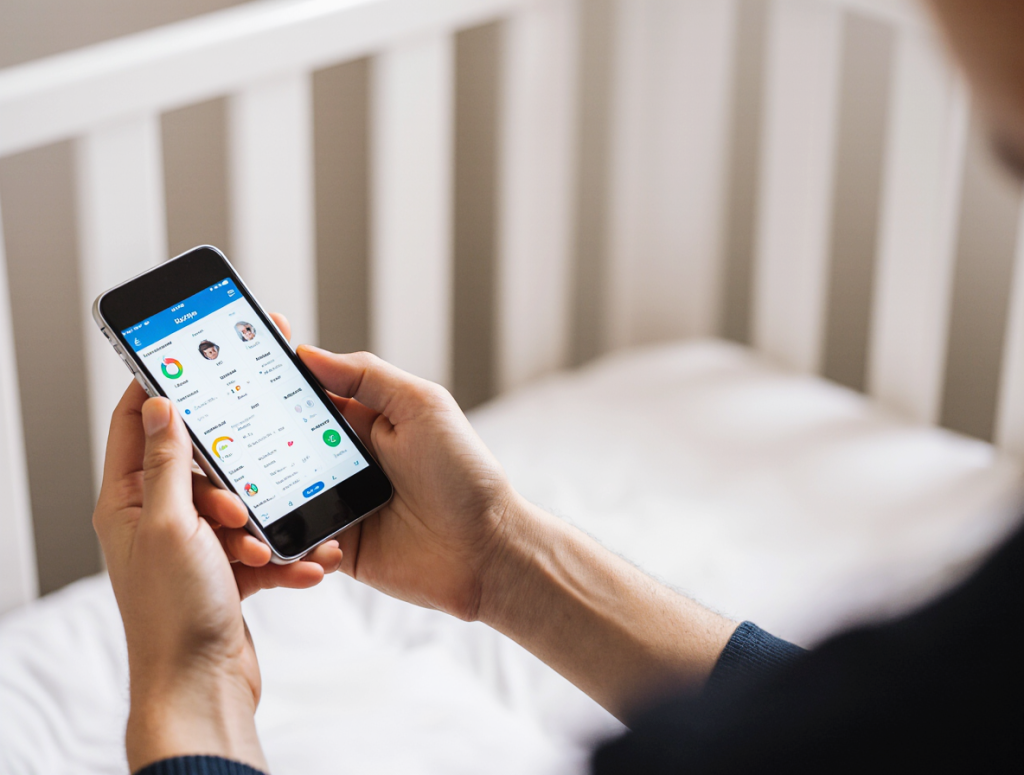
A supportive parenting app focuses on collaboration, not control.
Look for features that align with the E-E-A-T principles (Experience, Expertise, Authoritativeness, and Trustworthiness):
| E-E-A-T Element | What It Means for Parenting Apps | Example of Implementation |
|---|---|---|
| Experience | Real-world tested parental insights | Parents’ dashboard built from family psychology research |
| Expertise | Backed by behavioral science | Child-focused AI learning behavior models |
| Authoritativeness | Recognized in digital safety standards | Certified by child-safety agencies |
| Trustworthiness | Transparent data and privacy handling | Zero tracking and encrypted child data |
Apps that fail to meet these criteria can compromise both digital safety and emotional well-being.
Most devices — like iPhones, Androids, and Windows PCs — now come with built-in parental control tools. While convenient, they’re limited:
- They only work within one ecosystem (e.g., Apple Screen Time doesn’t manage Android devices).
- They provide basic restrictions, not behavioral insights.
- They can’t detect contextual triggers, like stress patterns or bullying signals.
In contrast, third-party digital well-being apps such as TinyPal combine:
- AI-driven emotion detection
- NLP-based content analysis
- Cross-device management
- Privacy-first encrypted data sharing
That means parents not only set limits — they understand why limits are needed.
AI isn’t just about automation anymore. In 2025, it’s about understanding human emotion.
AI parenting apps now analyze tone, activity, and behavior across messaging platforms (with parental consent) to identify:
- Emotional distress
- Peer pressure situations
- Possible cyberbullying
- Excessive nighttime phone use
Using NLP and sentiment detection, apps can notify parents gently — “Your teen’s tone has shown signs of stress lately. Consider talking about school workload.”
This approach supports emotional guidance, not surveillance.
While many parenting apps claim to protect families, some ironically collect too much personal data.

Parents should always verify that the app:
- Uses end-to-end encryption for data sharing
- Has a clear data deletion policy
- Does not sell behavioral data to advertisers
- Operates under COPPA and GDPR compliance
Apps like TinyPal implement zero-data-tracking models — ensuring that all child activity remains stored locally or under encrypted parental control.
Remember: Digital safety starts with privacy.
Technology should never replace communication. The key to sustainable digital parenting lies in mutual trust.
Here are five proven strategies:
- Be transparent: Tell your child why you use a monitoring app.
- Set shared goals: Agree on healthy screen limits together.
- Create family rules: Example – no phones during dinner.
- Encourage open dialogue: Discuss online experiences weekly.
- Review reports together: Use app insights to educate, not punish.
Parenting apps like TinyPal are designed with this exact philosophy — to strengthen family connection, not surveillance anxiety.
When evaluating the top parenting apps in 2025, TinyPal consistently stands out for one reason — it puts family trust first.
- AI-powered yet privacy-centric
- Predicts emotional fatigue via behavioral data
- Balances learning time and recreation
- Provides parent–child conversation prompts
- Transparent privacy architecture
- Built by a team of family-tech psychologists and AI engineers
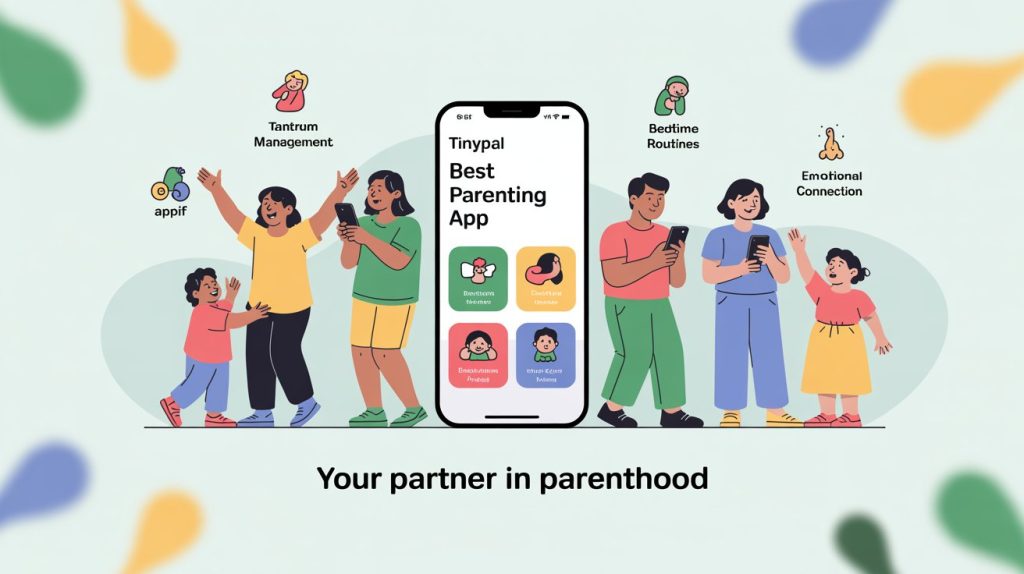
User Review (Verified Parent, New Jersey):
“TinyPal changed the way I guide my kids online. It helps me understand their emotional state without invading their space. It’s a partnership, not a punishment tool.”
TinyPal exemplifies what the next generation of parenting technology should be — empathetic, ethical, and educational.
By 2030, AI is expected to evolve from screen-time tracking to predictive emotional analytics, helping families proactively manage stress.
We’ll see:
- Emotion-based content moderation
- AI-assisted family therapy integration
- Context-aware smart notifications
- Decentralized privacy-first parenting platforms
For now, the smartest step any parent can take is to start building digital literacy and trust within their family — with the right tools by their side.
Parenting in the digital era doesn’t have to mean surveillance. It means guidance.
By using balanced, AI-empowered, privacy-safe apps like TinyPal, families across the U.S. can raise children who are both digitally skilled and emotionally secure.
Digital well-being is not about control — it’s about connection.
