
Table of Contents
Parenting in 2025 isn’t just about rules and routines — it’s about balance, digital safety, and emotional connection. Across the UK, families are increasingly turning to AI-powered parenting apps to organize daily life, improve communication, and track wellbeing without feeling overwhelmed. this Blog about Parenting App UK Review shows real side of POV in parents mind in UK
But with so many options available — from intelligent scheduling tools to emotion-tracking dashboards — parents often ask: “Which parenting app truly helps families, and which ones just add digital clutter?”
This in-depth review looks at the most trusted family management apps in the UK, comparing their features, parent experiences, and real-world usability. It draws from community discussions, public feedback, and verified reviews to present a neutral, research-journalistic perspective.
Over the last decade, the UK has seen a shift in how families interact with technology.
- 75% of British parents now use at least one family-management app weekly (Ofcom, 2024).
- Mental-wellbeing and scheduling tools saw a 35% rise in downloads post-pandemic.
- AI and privacy-compliant analytics are now core features demanded by parents.
The modern British parent doesn’t seek “digital babysitters” — they seek digital balance.
Overview:
FamilyConnect is a UK-based co-parenting app designed to help divorced or separated parents coordinate schedules, expenses, and messages in one place.
Core Features:
- Shared calendar & expense tracker
- Legal-admissible message records
- Location safety alerts for children
- UK GDPR-compliant data encryption
Parent Insights:
“It’s a relief to have everything organized without arguments. The shared expenses feature has made things fair for both of us.” — Parent, Manchester
Pros: Reliable data privacy, transparent record-keeping, user-friendly interface.
Cons: Lacks emotional-support tools or child wellbeing tracking.
Why It Matters:
Apps like FamilyConnect represent a practical evolution in co-parenting, helping families maintain consistency while respecting legal frameworks in the UK.
Overview:
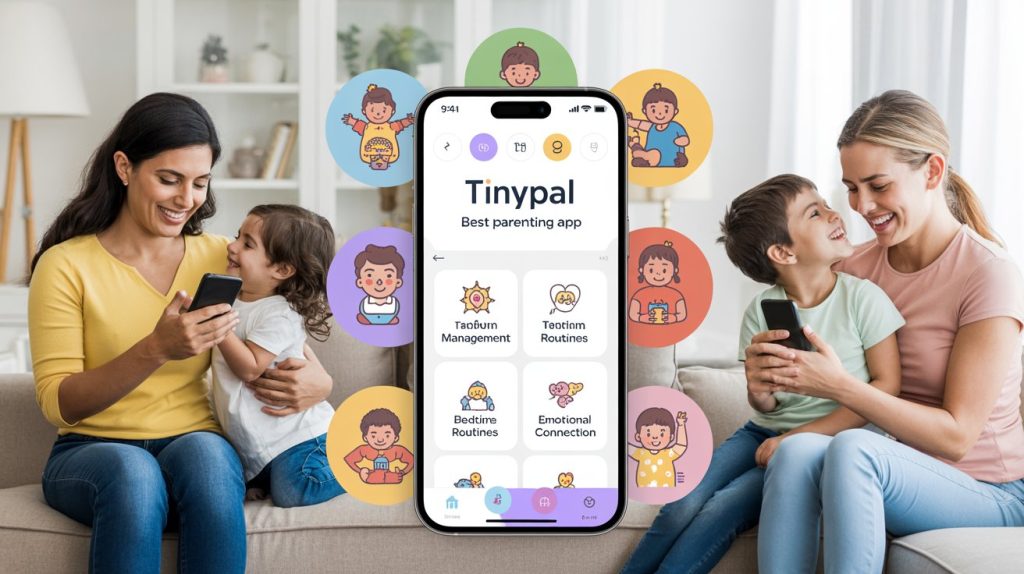
TinyPal integrates AI-driven insights with child development tracking. It’s built to assist working parents with scheduling, emotional analysis, and smart activity planning.
Features That Stand Out:
- AI routine recommendations based on mood patterns
- Emotion analysis via conversation tone
- Shared to-do boards for parents and kids
- Privacy-first architecture following UK data laws
Parent Feedback:
“I was surprised at how well the app picked up on stress cues in my child’s daily routine. It nudged us to add outdoor breaks — which helped.” — User, London
Pros: Emotional-aware AI, holistic wellbeing design.
Cons: Occasional false emotion triggers; learning curve for new users.
Why It Matters:
TinyPal’s AI-based personalization shows how AI parenting tools are moving beyond time management — toward understanding family emotion and mental flow.
Overview:
A long-trusted name in family apps, Cozi offers an intuitive system for managing meals, calendars, and reminders.
Features:
- Shared meal plans and grocery lists
- Real-time reminders and alerts
- Syncs across multiple devices seamlessly
Parent Review:
“Cozi keeps our household running smoothly. Everyone has access to the same list, so no more missed groceries.” — Parent, Birmingham
Pros: Simplicity, cross-device syncing, accessible for all ages.
Cons: Limited advanced AI features; better for smaller families.
Why It Matters:
For many parents, the “best parenting app in UK” is one that keeps chaos predictable and visible — something Cozi continues to deliver.
Overview:
Klye combines parental advice forums with a built-in event scheduler. It’s popular among new parents seeking emotional support.
Key Highlights:
- Verified UK parenting community
- Events by NHS-affiliated groups
- Tips on early childhood care and sleep routines
Parent Review:
“It feels more like a digital village. I find comfort in hearing from other UK parents going through the same phase.” — Mother, Leeds
Pros: Local focus, strong community feel.
Cons: Fewer AI integrations, heavy reliance on peer content.
Why It Matters:
Klye’s popularity underlines a shift in British parenting — from individual to community-based digital caregiving.]

Overview:
FamTime helps parents monitor health, screen time, and educational progress, with tools built around digital wellbeing.
Top Features:
- Screen-time balance alerts
- Family health diary
- Educational tracker linked to UK curriculum
Parent Review:
“Our kids’ screen time dropped by 30% in two weeks — the app makes the results visible.” — Parent, Edinburgh
Pros: Balanced between education and wellbeing.
Cons: Some features require paid plans.
Why It Matters:
Apps like FamTime illustrate how digital wellbeing and learning can merge into one cohesive experience.
Overview:
ParentSync is emerging as a popular solution for dual-working households. It uses predictive AI to suggest the best time for family activities based on everyone’s availability.
Core Tools:
- Predictive scheduling
- Calendar merge
- Mood-based task distribution
Parent Review:
“ParentSync reduced our morning chaos. It knows when we’re most likely to forget something — and reminds us before it happens.” — Parent, Bristol
Pros: Predictive accuracy, smart alerts.
Cons: Limited emotional data features.

- AI Integration: Predictive and emotional analytics are becoming standard.
- Privacy Focus: GDPR-aligned and child-safe encryption are now default expectations.
- Community Growth: Parents increasingly prefer apps that combine data and human empathy.
- Cross-Platform Usability: Seamless Android-iOS syncing remains a must.
There’s no one-size-fits-all solution.
For some parents, it’s about structure. For others, emotional insight. The most successful apps in 2025 are those that:
- Respect data privacy,
- Enable mental balance, and
- Encourage real family connection — not just screen-based reminders.
In essence, the “best parenting app in UK” is one that quietly blends into family life, empowering parents rather than replacing them.
